
the ethics of CONSOLATION: extracts from the diary
BY PUSHKAR SANYAL
Still from Stalker by Andrei Tarkovsky
19.12.2025 – 10:45 PM
What makes us human is our deviances. It is often the case that the outwardly most kind person is anything but underneath; or the begrudgingly giving person is the most charitable. Not to be taken in by appearance nor exhibited behaviours requires an intelligent bent of mind, but understanding that this deviance is NOT deviance, but a trait of what makes us very human, is the exciting possibility this intelligence must shed light on.
To be truthful to ourselves and to others involves a set of behaviours that is manipulative because it is under the assumption that transparency is the norm. Moreover, it hegemonizes cognitive ability and one’s access to it under all conditions. Does this recognition imply that my suffering is abated? At times these convictions crumble.
There is a beyond to this – one that loves and grows. A one that is okay to be humbled by the more creative, the more intelligent, the more loving. The more…hmm. How does one deal with the less though? How do these hierarchies form, and how do I dissolve them?
27.12.25 – 10:29 PM
Maintenance: Funds, care, knowledge.
Ability: Talent, Discipline, Focus
Ideas: See, Read, Listen
Inventing oneself out of thin air is not just a mental shift. It is real and is out there. It’s not waiting to be found nor something that is bound to happen. It in fact may never.
Watching a tiger walk around on a safari is a good way of understanding why it may never.
06.01.26 – 11:03 PM
In standard six or thereabout, each of us had to write a series of quiz questions on a large chart paper and post it up on a poster board in school. I remember enjoying the process of trying to answer questions put up by others.
Kofi Annan, I write as the correct answer to the ‘Who is the current UN Secretary General’ question. I write down more answers, some half-convinced, some wild guesses. I thought I had done well. A few days later, during library class, I was not among the top three.
Pushkar Sanyal, my name rang out as the consolation prize winner.
Consolation Prize.
There is a lot of philosophy in this story.
Over time, of course, I have gotten better at the signs. I remember someone, and I see their message. I wait for a sign, and someone smiles at me bewitchingly.
Staying in the game is a response to one’s own intellect. Or is it an excuse to drift? …to let time do its own bidding on me? I fear that if I attend to everything, I will combust into a million speckles of tears and laughter.
Sanity is the consolation prize
16.01.2026 – 12:30 AM
O Mother, in you I see all women. Your image smokes up like incense at the slightest crack in my heart. You have taught me not to care about being useful, and not to care about having a heart broken. And you will deny both.
It does appear to me that I have now gone to the edges. In football manager, the spikes would represent the attributes. Longer the spokes the better the attributes of a player. Honesty, sensitivity, rationality, Machiavellianism – I imagine all and more to have large spokes for me. I writhe in the edges like a worm.
Flowers, flowers, keys of the piano.
18.01.2026 – 2:41 PM
The sunlight on the back of my neck rests. It kills the idea of me.
I finally understand the protagonist of Paris, Texas, and the premise of his recognition. It was the constant sun on the back of his neck.
There is another film, Meghe Dhaka Tara which points to the same truth. It ends, and Paris Texas continues.
Love, Heartbreak, Insanity, Time, Time, Time, Life. There is no death.
30.01.2026 – 11:29 AM
I walk the streets of our cities. Apathy is evident everywhere. I don’t have a problem with it.
It is walking with my people, the streets and lanes that have held many a foot, the historical and social forces of resistance, struggle, and existence that envelop my mind and move my feet. Yet soon this energy loses steam, and my intelligence gives way to a familiar comfort. And money becomes the pariah in my situation. I understand this as much as anyone else.
The ethics in this elude me. Do my Brahminical roots have to do with this ebb and flow of energy? Upper caste corporate employed women cough and snigger at any suggestion of walking the streets. They have put themselves in a position where they never have to, just like the fantasy for the rest of the country.
What are my privileges, and why isn’t there a way to avoid exerting them? I’m afraid that we will forget the old codes.
13.02.2026 – 10:21 AM
The large tree outside my window is bare. Sometimes it depicts the state of my soul.
The tension between avoiding immersion and apathy is real. It gnaws at my skin. I’m in water, and I refuse to drown, taking large gulps of breath as my head bobbles above the surface.
Should I have read those Hemingway stories? Yuval Harari said the only thing I can control is the present moment and my mind. The consequence: a scholarly life, the production of thoughts.
There is a guy at work who wears the same shirt every day. I have not dared to ask him if it’s the same shirt lest he get offended. What does he believe in, if anything at all? Identity is intertwined with belief. I suppose I’m delusional to think that we accept people into our lives based on this rather than if we could just have ‘fun’ together.
22.02.26 – 7:11 PM
My originality is in my processing. It’s biological, structural, and architectural; a tectonic system. I’m a cyborg.
My style is my aesthetics. A zone of interests, ideas, opinions, judgments, and expressions that have emanated and constantly shift based on my environment and my consumption. It’s what I identify in others as well. Style: something built from within but with effortless ease. A mix of self-investment, exercise of agency, and a will that exerts to the outside, the formation of a personal aesthetic.
I like to watch plays because I enjoy set-pieces. Bodies that move, and voices that bellow. It is storytelling, dance, and catharsis.
on response, the perils of knowing, and observation: extracts from the diary
BY PUSHKAR SANYAL
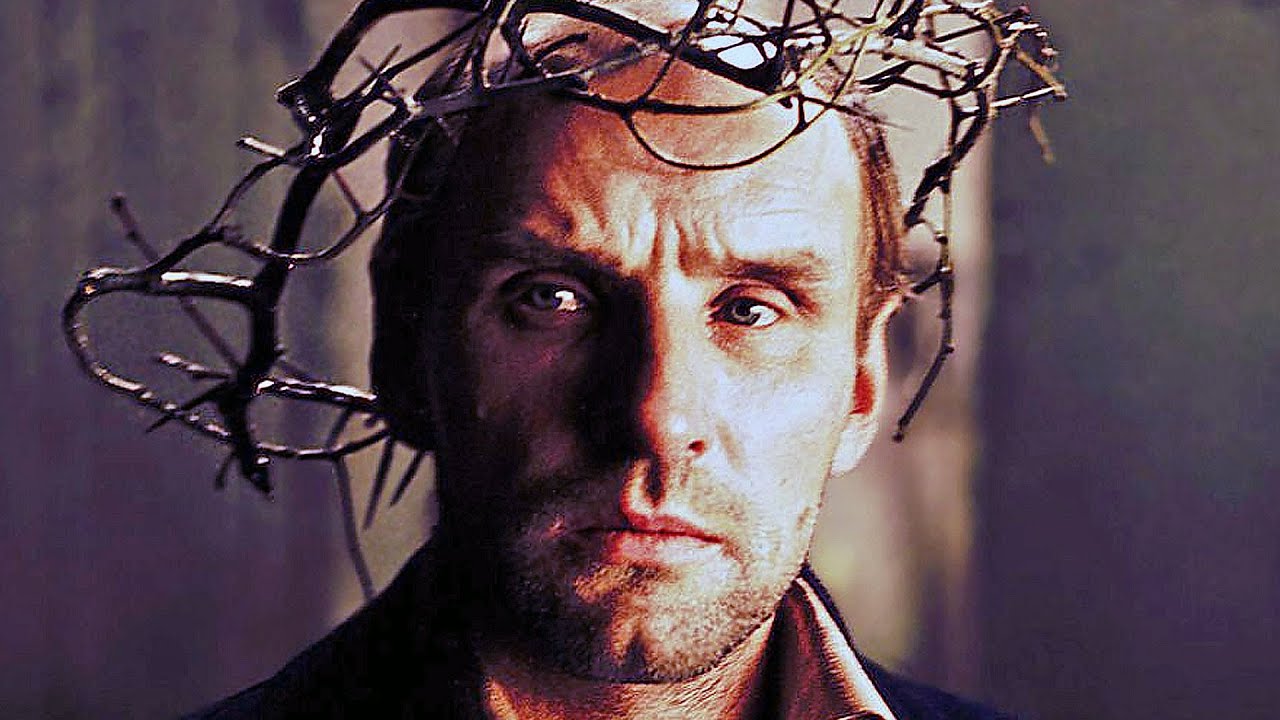
Still from Stalker by Andrei Tarkovsky
28.09.2025
I am in a coffee shop. The air quakes with the rumble of voices. I finally hear the group that has been speaking only to each other. Otherwise, it had been the proclaimers. I am being mean, perhaps it’s the timber of these voices. Some just peak more than others.
‘The unlimited sway of causality in the It-world, which is of fundamental importance for the scientific ordering of nature, is not felt to be oppressive by the man who is not confined to the It-world but free to step out of it again and again into the world of relation. Here, I and You confront each other freely in a reciprocity that is not involved in or tainted by any causality; here, man finds guaranteed the freedom of his being and of being. Only those who know the relation and who know of the presence of the You have the capacity of decision. Whoever makes a decision is free because he has stepped before the countenance.’
- Martin Buber, I and Thou
Response is a meta-spatial activity. It is the spark that lights some people. A force through which community emerges. And community then enters each individual, dribbling to the inner contours of their hearts. Living through this force is a joyous fuck you to the opposite nothingness. A life of response is the only response, and much more.
04.10.2025 – 8:18 AM
Things repeat, but times do not. The morning sun beats down on the building opposite – I wonder if the birds that crow in the morning distinguish the days.
What are high vibrations other than a high dopamine baseline? Regulate your neuromodulators, and the world discloses its warmth, mysteries, connections, unity, and filth. Should I package my feelings inside a chicken puff and sell them? Others appear to do so.
People who refuse to narrate are mysterious and challenging. I suppose the world is more valuable because they exist.
‘I said I wondered how he could fail to see the relationship between disillusionment and knowledge in what he had told me. If he could only love what he did not know and be loved in return on that same basis, then knowledge became an inexorable disenchantment, for which the only cure was to fall in love with something new.’
- Rachel Cusk, Outline
Forward neck syndrome is such a turn-off.
04.10.2025 – 9:11 AM
‘They all treat me
Like a dog
Like I’m just another
Cog
But they can all
Suck my cock
Shit, I’m dreaming (I’m dreaming)
Again’
- Peter Cat Recording Co., ‘Shit I’m Dreaming’ – Bismillah (2019)
Nietzsche says rage and spontaneous will are internalized to produce the sphere of the ‘soul’ as well as a sphere of morality. Turn to your nearest painting and find this inversion.
A mind of chaos seeks to find justice, while a mind of calm knows there is none.
23.10.2025 – 5:26 PM
In ‘Stalker’, an Andrei Tarkovsky film, there is an area called the zone that grants your innermost secret desire. The path to the zone is treacherous and requires sacrifice. One of the characters narrates a story about a man and his brother. Their journey to the zone was difficult, and the sacrifice required his brother to die. The man calculated that the zone would grant his brother back. But it did not.
It did, however, help him win the lottery once he was back in the real world. Within six days of winning the lottery, he hung himself.
Judith Butler in ‘Giving an Account of Oneself’ suggests an ethical caution that counsels that one cannot prepare one’s own death at the expense of the other without the other’s death implicating me in my own. There is, as it were, a sociality based on the “I” and its finitude from which one cannot – and ought not to-escape.’
24.10.2025 – 8:28 PM
Foucault suggests that norms exert hegemony over self-knowledge. Almost as if they emerge from there. My recurring dreams reveal the same emotions. I hide, I save myself from getting caught in an illegal or illicit event.
Half a decade ago, there was an endeavor to create an inner poetic mood, to be able to string together suppressed emotions and cultivate a flow of disconnected images that would magically make symbolic sense on paper.
Do these images have any value? I suppose if I were a simpler man, I’d say yes
30.11.2025 – 5:03 PM
Precision and conviction are opposites. One who reaches the edge is bound to experience the opposite. There are no crystals here.
Driving past a sedan with boxed-in taillights, the windows are rolled down, and a surly, troubled-looking man is behind the wheel. The windshield is smashed on the left side. Earlier this month, there was International Men’s Day. I speed past the surly man and find other sad men in the cockpit of their run-down vehicles, each with beaten faces.
Once I requested a driver to slow down at turns. There was an issue with the front wheel chassis that was compromising the physics at the back. Undeterred by the request, he drove on as usual to my mild panic, and it was only when I humoured him with an earthquake remark that he responded, laughing heartily and proceeding to drive with caution thereafter.
Philosophy for passengers.
06.12.2025 – 7:30 PM
A favourite pastime of mine on public transport is spying on people’s phones. Not because I need a giggle, it’s often just to satiate curiosity on how people scroll and stream. Yesterday, I caught a young man using the swipe keyboard to add ‘High on You’ to a new playlist. He swipes from C, criss-crossing to four other letters. The screen says Cute. He deletes and does the swipe keyboard thingy again. This time, it says Coffee. He deletes again, this time swiping with more precision.
Core.
There is a moment of reflection. This is a song that spoke directly to him, and he hopes there will be more.
Some things die a quick death; others simmer for a long time.
Bibliography
- I and Thou – Martin Buber (1923)
- Outline – Rachel Cusk (2014)
- Bismillah – Peter Cat Recording Co (2019)
- Stalker -Andrei Tarkovsky (1979)
- Giving an Account of Oneself – Judith Butler (2005)
- Foucault Live, Collected Interviews 1961-1984 – Michel Foucault (1989)
ON INDIAN-NESS AND INDIA: extracts from the diary
BY PUSHKAR SANYAL

S. H. Raza. Untitled, ca. 1940s. Acrylic on paper. H. 16 ¾ x W. 15 3/8 in. (42.5 x 39.1 cm). Jane and Kito De Boer Collection
20.06.2024
Mediocrity is unescapable
Out of the bus windows, the air is thick with possibilities. Inside the bus, there is silence. This analogy arrives to consciousness and streams out like one of those often-had thoughts one grows out of. You check your phone, and you swipe up and down for notifications. There are a few but you decide to tend to them later. Instead, you choose to consume something of substance, perhaps a podcast to activate your thinking mind, or an album that may percolate your emotional mind. You choose substance over temporality. But here’s the thing – your special ability to create unique moments for yourself sitting inside the bus is merely a ruse. You envelope yourself—in activity that helps you forget what you recognize often.
The object of this essay is not to draw out a moral framework for urban loneliness but to examine the perceived distinction between what is possible and what is.
For a while now I have been grappling with my sense of self. In between bouts of authenticity, there exists a desire so foreign it leaves me tranquillized. This is the desire for achievement, for performance. Most of us seem to have negotiated our relationship to success, but as I look out of the window again, I see mediocrity. We are a modern nation that pines for success with the result usually being mediocre. What interests me is not the counter-reactors nor the hustlers, but the psychological foundations of this effect. Economic, social, and psychological barriers emerge at an individual and societal level yet a deeper fracture of identity is what I suspect.
The identity of the modern Indian is complex. A simple question could draw varied responses across the country. Ashis Nandy in his seminal work The Intimate Enemy refers to colonized societies like India as ahistorical. He states that while Western societies have clear indicators of history with the end of the class struggle signifying the end of history, the colonized continuously re-interpret history upon encountering a fractured present.
Nandy delightfully weaves in a Gandhian position that Indian society “because they faithfully contain history, because they are contemporary, and unlike history, are amenable to intervention…”
He also sheds light on an unending allure for the contemporary Indian – “Myths are the essence of a culture, history being at best superfluous and at worst misleading……..Consciously acknowledged as the core of a culture, myths widen instead of restricting human choices”.
His work details the psychology of colonialism. Still, the fascinating Chapter 2 has the crux of his work wherein he seeks to decolonize the mind by examining polarities: the Universal versus the parochial, the material (or the realistic) versus the spiritual (or the unrealistic), the achieving (or the performing) versus the non-achieving (or the non-performing), and the sane versus the insane. Imperial Western societies exemplify the first set of traits while a colonized Indian view exemplifies the latter. It is an enchanting premise that provides a solid articulation of the anxiety within. Through a re-interpretation of these ideals via critical individuals like Gandhi, Sri Aurobindo, Rudyard Kipling, VS Naipaul, and Orwell, among others, Nandy elucidates how we can distinguish these psychological truths with the end goal of synthesis.
“The Hindus have traditionally felt burdened with the responsibility of protecting their civilization not by being self-conscious, but by securing a mythopoetic understanding – and thus neutralizing – the missionary zeal of their conquerors….”
“…At his heroic best the average Indian is a satygrahi, one who forges a partly coercive weapon called satyagraha out of what Lannoy calls ‘perfect weakness’. In his non-heroic ordinariness, he is the archetypal survivor. Seemingly he makes all-around compromises, but he refuses to be psychologically swamped, co-opted, or penetrated.“
Through these and other searing passages, Nandy goes on to synthesize the dualities while refraining from exalting the colonized Indian. Still, there is a gentle nod to this unheroic spirit. Under periods of oppression, he extols the parochial, the folk, the spiritual, and the non-achieving as key tenets for survival.
29.03.2025
What VS Naipaul points to is remarkable. He shows in grisly familiarity the engine of living in Indian society. This engine, and the oils for the engine, both succumb to his senses.
The greatest service Naipaul provides to his readers is his ode to education. And how sense has the potential to be an aid to the poor. He affords readers the joy of an unwaveringly critical eye that accepts and yet is emboldened by the distance it has from the stupid. His Indian-ness cannot be denied because of his ancestry. A life of grappling and breaking out of the oddities that shape Hindu life, his writing is never strained of impulse, is interested in the idea of God, and is fuelled by ambition. All traits he shares with Indians.
Perhaps in 2025, amidst post truth, AI, techno-feudalism, and all the fads that represent the short-sightedness that young people have today, my Indian-ness comforts me. It jostles with the extra honking in the streets, and situates itself in the underbelly. I try and understand my underbelly with my society’s and it’s all there. I see the nature of the relationships, the conveniences and its arrangements, the breaking down of its structures over time, including family. Perhaps the transition period is weak. Naipaul analyses my Indian motivations condemning it to my circumstances. He sees from the bottom because he is in the mud himself. Yet there is no slinging, merely an acceptance of the condemnation. One may only go up from here.
19.04.2025
Our lives are stupendously violent. A bike races in a narrow lane. It brakes, honks and turns, forging ahead of pedestrians and slow moving vehicles, the rider’s twisting palm is an automated rush of blood. The uneven roads and the blaring cars, sweat and thunder, carry themselves into thatched roofs and multi-storey apartments. A public infrastructure for all yet the honking, and the jostling for space is symptomatic of an exertion of power. ‘Conduct yourself with others as you desire them to behave with you’ – says the Bhagavad Gita.
Pratap Bhanu Mehta cites the roots of inequality to blame for the lack of social reciprocity that plagues my culture.
I speak my mind, and act wilfully to please myself without hurting others. I am aware of my Brahmanical roots. When I receive service, I decide to give extra or sometimes not if I’m mildly inconvenienced. Friends, lovers, family – nothing appears to escape from these recognitions. I am given and I take with full humility. The institutions of the country, and its custodians laugh with me. What is our sense of worth? On Instagram and LinkedIn people talk about themselves. Perhaps, even I should. Self-worth, decades of inequality, upward mobility, self aggrandizing behaviour: thoughts travel towards me like a train.
In The Burden of Democracy, Mehta cites Rousseau who diagnoses that the desire for having one’s worth acknowledged can express itself in all kinds of debased forms, some that require debasing others. Empowerment in this case means exerting power or influence over others, or some claim of power and influence that sets you apart, rather than a sense of empowerment that all can share. The problem Mehta outlines in detail is a collective culture that does not accost the individual the right to participate in the democracy as an equal participant. Apathy towards others and apathy towards the state go hand-in-hand. I read Mehta’s book and my body recognizes the oppression and the oppressed, the ebb and flow of energy, that tantalising energy that either rejoices or is enraged. When I see others and the lived experiences that reflects in their eyes and body language, I suspect a crumbling of my convictions. And it is in this hapless state of doubt that I focus on what’s in front of me: my mind and my tolerance towards injustice.
‘The best lack all conviction, while the worst are full of passionate intensity’ – W.B. Yeats
Bibliography
1) The Intimate Enemy – Ashis Nandy
2) India: A Million Mutinies, A House for Mr. Biswas (Fiction) – VS Naipaul
3) The Burden of Democracy – Pratap Bhanu Mehta
4) The Second Coming (poem) – William Butler Yeats